
VerifyNow guide
Bank Account Verification Fraud in South Africa: How to Verify Bank Details and Prevent Payment Fraud
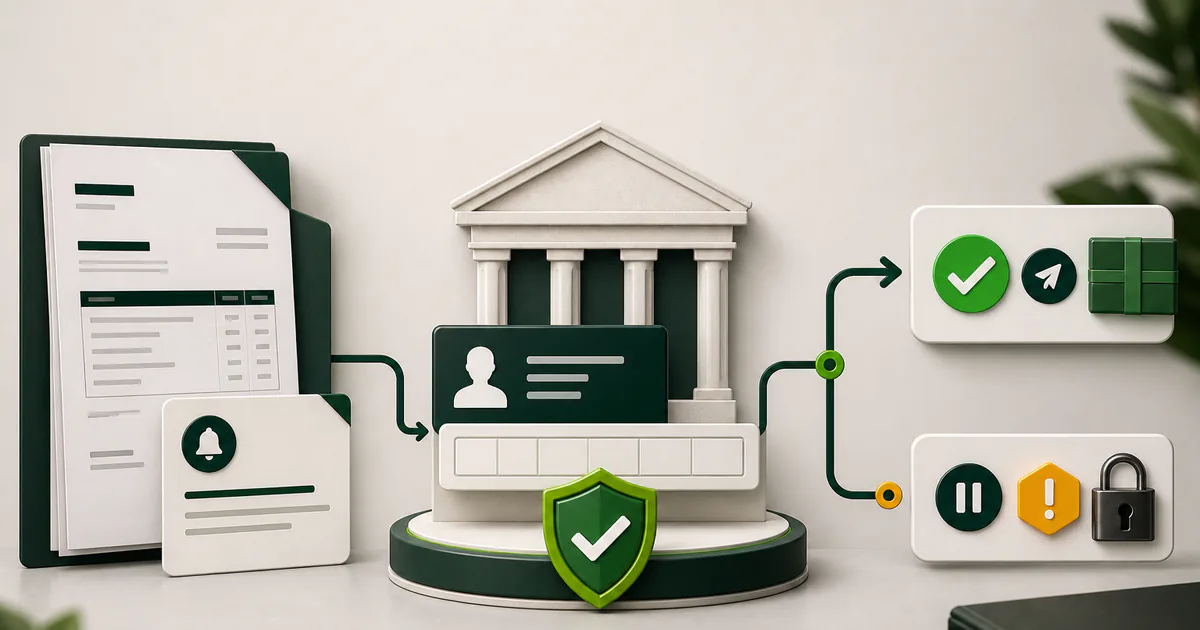
Verify new or changed bank details before releasing money. Submit the bank, account number, account type, and account-holder identity. VerifyNow returns bank-side account and holder match signals so the team can pay, pause, or escalate before a supplier, payroll, refund, or loan payment.
Verify bank account detailsLearn how bank account verification fraud works in South Africa and how to verify bank details before making payments. Prevent payment redirection fraud, payroll fraud, and identity theft with real-time bank account verification.
Why Bank Account Verification Matters in South Africa
SABRIC's annual crime reporting tracks digital-banking and application-fraud losses across South African banking channels. Payment-redirection and impersonation attacks create a practical risk for organisations that accept changed banking details by email. See the SABRIC Annual Crime Statistics 2024.
Every business that makes payments — whether to suppliers, employees, or customers — is at risk. Bank account verification is the process of confirming that a bank account number, branch code, and account holder name are valid and belong to the person or entity you intend to pay.
Without verification, you are essentially trusting that the bank details on an invoice, employment form, or payment request are legitimate. Criminals exploit this trust every day.
How Bank Account Fraud Works
1. Payment Redirection Fraud (Business Email Compromise)
This is the most common and costly form of bank fraud targeting South African businesses. Here is how it works:
- A criminal intercepts or spoofs an email between your business and a supplier
- They send a fraudulent email — often from an address that looks nearly identical to the supplier's — claiming their bank details have changed
- Your accounts payable team updates the banking details and processes the next payment
- The money goes directly to the criminal's account
Practical impact: A changed invoice can redirect a legitimate payment when staff confirm the request through the same compromised email thread.
How verification prevents this: By verifying the new bank account details against the account holder's identity before updating your payment records, you would immediately see that the account does not belong to your supplier.
2. Payroll Fraud
Payroll fraud occurs when:
- A fictitious employee is added to the payroll with a criminal's bank account
- An employee's bank details are changed by an insider to redirect salary payments
- A terminated employee's record is kept active with altered banking details
Payroll fraud can involve ghost employees, unauthorised bank-detail changes, or continued payments after termination.
How verification prevents this: Verifying that the bank account belongs to the employee (matching the account holder name to the employee's ID number) catches ghost employees and unauthorised banking detail changes immediately.
3. Refund and Claims Fraud
In this scheme:
- A fraudster requests a refund or insurance claim payout
- They provide bank details for an account they control, not the original account
- The business pays the refund to the wrong person
This is particularly common in insurance, e-commerce, and government grant disbursements.
How verification prevents this: Confirming that the account belongs to the original customer or claimant before processing a refund stops money from reaching fraudulent accounts.
4. Account Takeover and Identity Theft
Criminals use stolen identity documents to open bank accounts or claim ownership of existing accounts. They then use these accounts to receive fraudulent payments, launder money, or commit further crimes.
How verification prevents this: Cross-referencing the bank account holder with a verified South African ID number ensures the person requesting payment is who they claim to be.
How to Verify Bank Details in South Africa
Step 1: Collect the Required Information
To verify a bank account, you need:
- Account number — the full bank account number
- Branch code — the universal branch code for the bank
- Account holder name — the name registered with the bank
- ID number (optional but recommended) — the SA ID number of the account holder
Step 2: Use a Bank Account Verification Service
Manual verification (calling the bank, waiting for confirmation letters) is slow, unreliable, and not scalable. Modern bank account verification services like VerifyNow provide:
- Real-time results — verification completed in seconds, not days
- Account existence check — confirms the account number and branch code are valid
- Account holder match — confirms the name on the account matches the name you have
- ID number cross-reference — confirms the account belongs to a specific ID number holder
- Account status — confirms whether the account is open and active
Step 3: Verify Before Every Payment
Best practice is to verify bank details:
- When onboarding a new supplier or vendor
- When a supplier requests a change of banking details
- Before processing the first payment to a new employee
- When processing refunds or claims to bank accounts
- Before disbursing loans or grants
Do not assume that because bank details were valid last month, they are still valid today. Accounts can be closed, frozen, or compromised.
Step 4: Keep a Verification Audit Trail
Keep bank-account verification records under your organisation's risk, legal, and retention rules. The record can support a payment decision and later review.
Bank Account Verification and FICA Compliance
The Financial Intelligence Centre Act (FICA) places customer due-diligence and record-keeping duties on accountable institutions. The required controls depend on the institution's risk-based approach and customer relationship.
Bank account verification can support a defined payment, supplier, payroll, refund, or customer control. It does not replace identity verification, beneficial-ownership checks, ongoing due diligence, record keeping, or required FIC reporting.
The Protection of Personal Information Act (POPIA) applies to the personal information used for the check. Establish a lawful basis, collect the fields needed for the purpose, protect them, and apply an appropriate retention period.
Which Banks Can Be Verified?
VerifyNow supports bank account verification across all major South African banks:
- ABSA Bank
- Access Bank
- African Bank
- Bidvest Bank
- Capitec Bank
- Discovery Bank
- First National Bank (FNB)
- Grindrod Bank
- GoTyme Bank
- Investec
- Nedbank
- Sasfin Bank
- Standard Bank
- Bank Zero
Both cheque (current), savings, and transmission accounts can be verified.
API Integration for Automated Verification
For businesses processing high volumes of payments, VerifyNow offers a REST API that can be integrated directly into your:
- ERP system (SAP, Oracle, Sage)
- Accounting software (Xero, QuickBooks, Pastel)
- HR and payroll systems
- Insurance claims management systems
- E-commerce platforms
A simple API call before processing any payment can prevent fraud losses worth millions.
POST /api/external/bank-account-verification
{
  "type": "Individual",
  "firstName": "John",
  "surname": "Smith",
  "identityNumber": "8501015800083",
  "identityType": "IDNumber",
  "bankAccountNumber": "62012345678",
  "bankBranchCode": "250655",
  "bankAccountType": "Savings",
  "mode": "production"
}
The response tells you in seconds whether the account exists, is active, and belongs to the person you expect.
Red Flags That Indicate Bank Account Fraud
Watch for these warning signs:
- Urgent requests to change bank details, especially via email
- Slight variations in email addresses (e.g., supplier@companv.co.za vs supplier@company.co.za)
- New bank details that differ significantly from previous records
- Requests to bypass normal approval processes
- Bank details that don't match the account holder's name or company name
- Multiple payees sharing the same bank account number
If you spot any of these red flags, verify the bank account before processing payment.
The Cost of Not Verifying
Consider what is at stake:
- Direct financial loss — the money sent to a fraudulent account is almost never recovered
- Legal liability — your business may be held responsible for failing to verify
- Reputational damage — clients and partners lose trust
- Compliance penalties — failure to demonstrate due diligence can result in regulatory action
- Insurance complications — many insurers require evidence of verification processes before settling claims
A single bank account verification costs a fraction of what a single fraudulent payment costs.
Getting Started with Bank Account Verification
- Create a free account at verifynow.co.za
- Purchase credits — pay as you go, no subscription required
- Verify via dashboard — enter bank details and get instant results
- Integrate via API — automate verification in your existing systems
VerifyNow is a Level 1 B-BBEE South African company with POPIA and FICA compliance built in. All verifications are logged and auditable.
Conclusion
Bank account fraud is preventable. By verifying bank details before every payment, your business can stop payment redirection fraud, payroll fraud, refund fraud, and identity theft before they cause damage.
The question is not whether you can afford to verify bank accounts — it is whether you can afford not to.